

What is GMP?
GMP stands for Good Manufacturing Practices. GMP is a system of quality assurance designed to ensure that products are consistently produced and controlled according to appropriate quality standards and their intended use.
GMP provides manufacturers with structured principles covering manufacturing processes, quality control, personnel, premises, equipment, documentation, storage and distribution. The objective is to reduce risks that cannot always be eliminated by testing the finished product alone.
GMP is particularly important for industries such as pharmaceuticals, food, beverages, cosmetics, medical products, dietary products and other regulated manufacturing sectors.
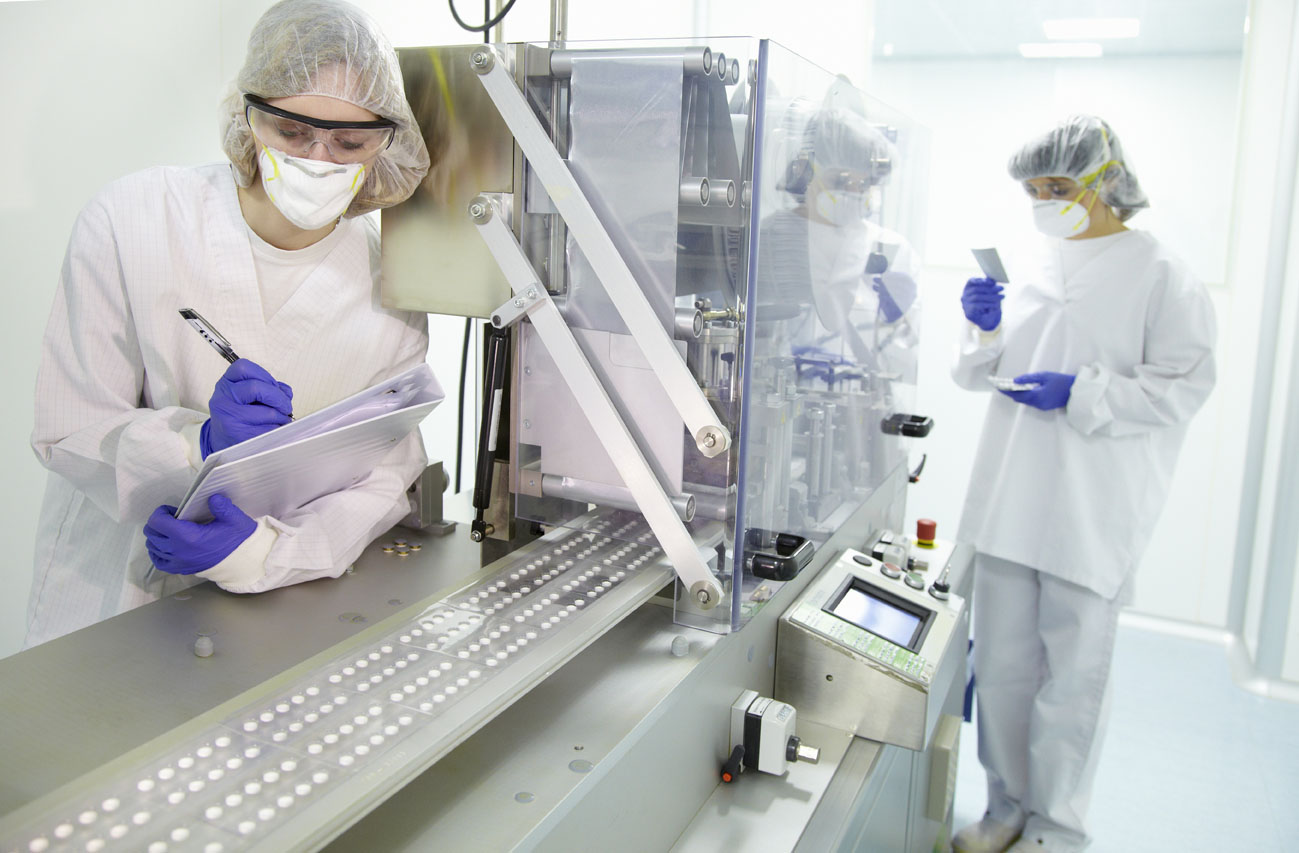
Why is GMP Important?
GMP helps manufacturers build quality into the production process rather than relying only on final-product testing. It is designed to minimize manufacturing risks such as contamination, product mix-ups, incorrect labelling and inconsistent production.
- Helps ensure consistent product quality and safety.
- Helps prevent contamination and product mix-ups.
- Ensures important manufacturing activities are documented.
- Promotes appropriate training and competency of personnel.
- Supports continual improvement of manufacturing and quality processes.
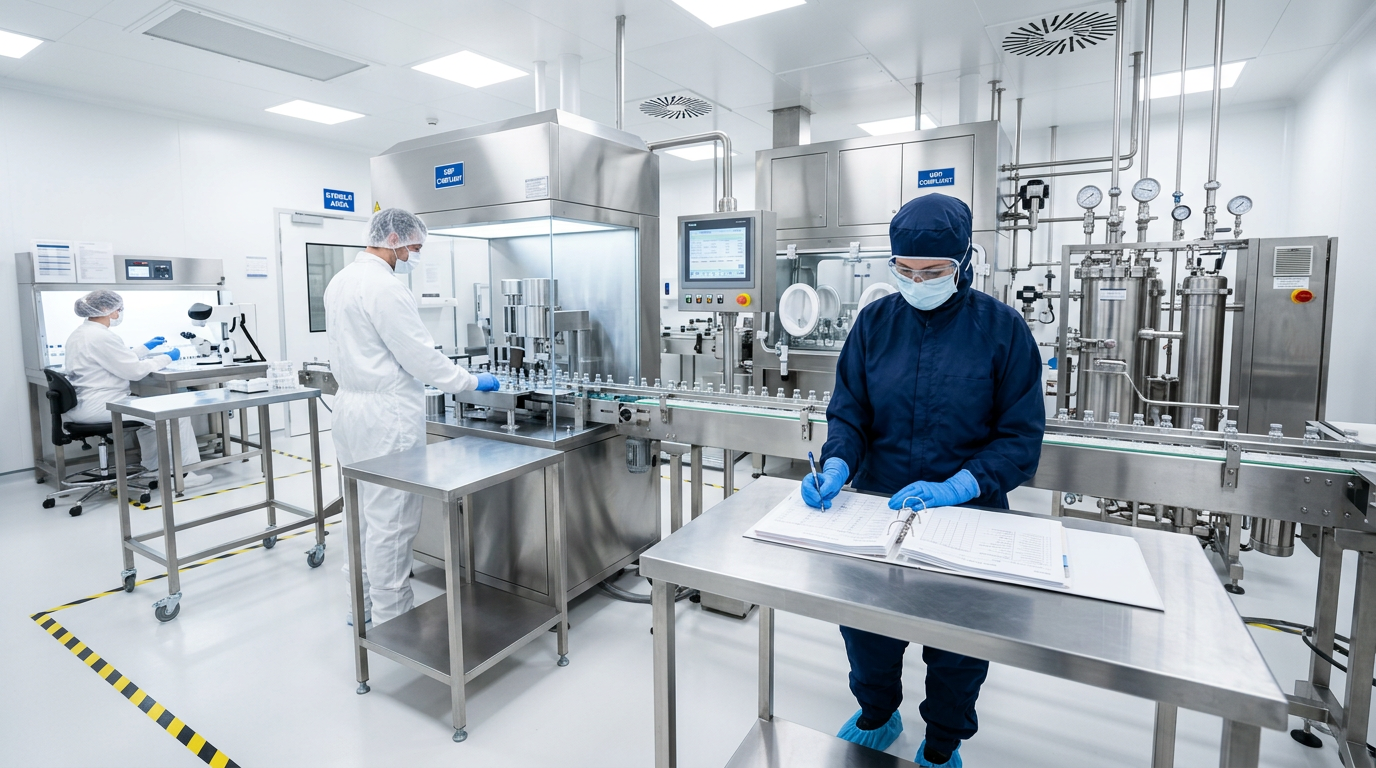
Key GMP Principles
Effective GMP implementation requires manufacturers to establish controlled processes and maintain suitable facilities, equipment, personnel and documentation.
- Clean and Suitable Premises: Manufacturing areas should be appropriately maintained and controlled to reduce contamination and other quality risks.
- Suitable Equipment: Equipment should be appropriate for its intended use and maintained according to defined procedures.
- Competent Personnel: Employees should receive suitable training and understand their responsibilities.
- Documentation: Manufacturing and quality activities should be properly documented and records maintained.
- Quality Control: Appropriate controls should be established to verify that products meet defined quality requirements.
- Controlled Distribution: Storage and distribution arrangements should help maintain product quality throughout the supply chain.

GMP CERTIFICATION / COMPLIANCE PROCESS
A GMP compliance programme generally involves reviewing current manufacturing practices, identifying gaps, implementing appropriate controls, documenting processes and preparing the organization for assessment or regulatory inspection.
Typical GMP Implementation Steps
- Initial Assessment: Review existing manufacturing and quality practices.
- Gap Analysis: Identify areas that require improvement or additional controls.
- Documentation: Develop or improve SOPs, records, procedures and quality documentation.
- Implementation: Implement required controls across production and quality functions.
- Training: Train employees on GMP requirements and their operational responsibilities.
- Internal Review: Conduct internal audits and corrective actions.
- Assessment / Inspection: Prepare the organization for applicable certification, customer or regulatory assessment.
- Continual Improvement: Monitor performance and maintain GMP controls over time.
GMP Documentation and Records
Documentation is an important part of GMP because it provides evidence that manufacturing and quality activities are performed according to established procedures.
- Standard Operating Procedures (SOPs)
- Batch manufacturing and production records
- Equipment maintenance and qualification records
- Employee training records
- Testing and quality-control records
- Deviation, investigation and corrective-action records
- Change-control documentation
Benefits of GMP Implementation
- Improves consistency and reliability of manufacturing processes.
- Helps reduce contamination and manufacturing risks.
- Strengthens customer confidence in product quality.
- Supports access to markets where GMP compliance is required or expected.
- Creates greater awareness of quality responsibilities among employees.
- Improves traceability and investigation of quality issues.
- Supports continual improvement of quality systems.
Industries Where GMP is Important
GMP principles are particularly important in manufacturing environments where product quality, safety, hygiene and controlled processes are critical.
- Pharmaceutical manufacturing
- Healthcare and medical products
- Food and beverage manufacturing
- Herbal and botanical products
- Cosmetics and personal-care products
- Laboratory and regulated products
Why Choose Ascent Inspecta?
Ascent Inspecta provides professional consultancy and advisory support to organizations seeking to strengthen their GMP compliance and quality systems.
Our experienced consultants can help organizations understand applicable requirements, identify gaps, improve documentation, prepare employees and establish practical controls that support consistent manufacturing and quality management.
- Experienced consultants and industry professionals
- GMP gap assessment and compliance support
- Documentation and SOP support
- GMP training and awareness
- Audit and inspection preparation
- Practical and industry-focused implementation support
Conclusion
GMP is an important part of a strong manufacturing quality system. It helps organizations establish controlled production processes, maintain suitable facilities and equipment, train personnel, manage documentation and reduce risks associated with contamination, mix-ups and inconsistent production.
Implementing GMP is not simply about maintaining documentation. It requires a quality-focused culture in which processes are consistently followed, monitored and improved.
Ascent Inspecta can support organizations in building practical GMP systems that strengthen product quality, operational control and regulatory readiness.
Get in Touch! Ask us any question/query on +91-9867-180-395. We would be happy to answer your concerns. You can also drop an email at info@ascentinspecta.com